
Blog
What Are The Pitfalls Of Using A Landline For Business In 2026?


For decades, the traditional landline telephone was the backbone of business communication. It was reliable, simple and widely used across offices everywhere. However, in 2026, the way businesses communicate has changed dramatically. Customers expect fast responses, flexible communication options and professional call handling.
Unfortunately, many companies are still relying on outdated landline systems that limit their growth and efficiency. Modern businesses require modern communication tools. Therefore, clinging to a traditional landline can create several hidden problems.
Landline phone systems lack mobility.
Traditional systems tie employees to a physical desk. Naturally, this makes it difficult to stay connected when working remotely, travelling or meeting clients outside the office. Today’s workforce is far more flexible. Teams work from home, collaborate across cities and stay productive on the move. A landline simply cannot support that level of mobility.
Modern cloud-hosted Commercial Phone Services allow employees to make and receive calls from anywhere using mobile apps or desktop softphones. Your business number can appear on outbound calls even when you are working from a smartphone or laptop. This ensures that customers always see a consistent professional identity.
Traditional phone systems often require costly hardware installations.
Businesses that use landlines must purchase Private Branch Exchange (PBX) systems, pay technicians for setup and replace equipment when it becomes outdated. These systems can quickly become expensive to maintain, especially when expanding your team or adding new phone lines. Modern business communication platforms eliminate much of that complexity.
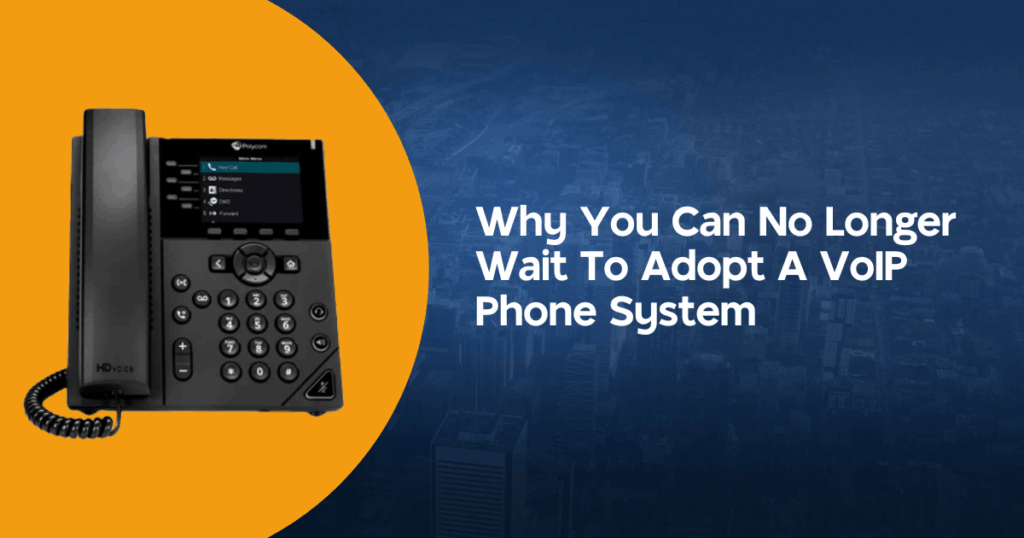
With cloud-based solutions, enterprise-grade desk phones such as the Polycom VVX series can be included at no cost with a service commitment. Also, mobile and desktop apps allow employees to stay connected without additional hardware.
Landline systems were designed for simple voice calls.
They typically lack the advanced features modern businesses rely on to manage communications efficiently. For example, many traditional systems do not include voicemail to email; call recording and transcription; AI-generated call summaries; advanced call routing; interactive voice menus; and professional multilingual greetings.
These tools help businesses operate more efficiently while improving customer experience. Without them, companies may struggle to manage call volume, track conversations or maintain consistent customer service.
Traditional phone systems don’t support business growth.
As a business grows, its communication needs expand. Hiring new staff, adding departments or opening additional locations can become complicated with a traditional landline system. Adding new lines often requires additional wiring, hardware upgrades and technician visits. This slows down growth and increases operational costs. Cloud-based phone systems allow businesses to scale instantly. New users, numbers and departments can be added quickly without major infrastructure changes.
As well, businesses that handle high call volumes need more advanced tools than a simple phone line. Landline systems rarely support modern call centre features such as ring groups, call queues or simultaneous ringing across multiple devices. Without these tools, calls may go unanswered or be routed inefficiently. Modern communication platforms support advanced capabilities such as group queues, Interactive Voice Response (IVR) tree routing, call monitoring, sequential routing and failover systems. These tools help teams respond faster while ensuring customers reach the right person every time.
Are you ready to upgrade your phone system?
To get started with Melo Technology’s cloud-hosted Commercial Phone Services, please don’t hesitate to call 1-888-MELOTEL or fill out the form on our Contact page!